Greetings, travelers! We’ve got a treat for you today, as we’re going to be getting into a horror story that has a lot of weight and depth to it. But more importantly, we’re going to talk to the person who weaves that tale and creates a huge, resonating tapestry out of it.
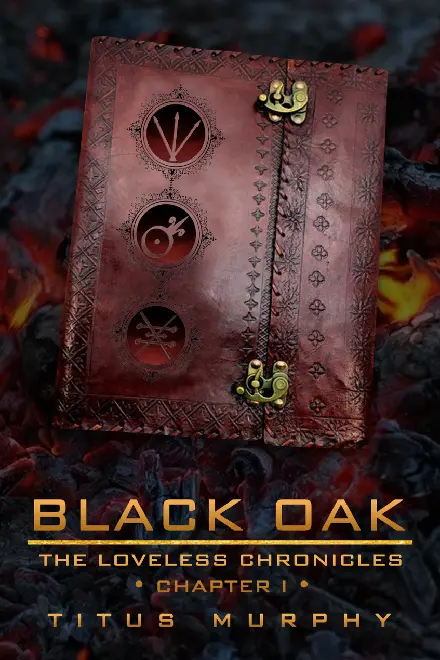
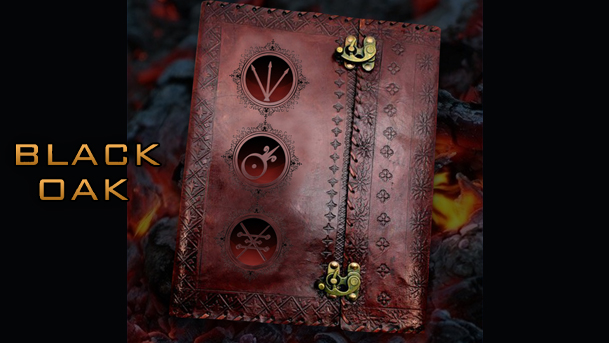
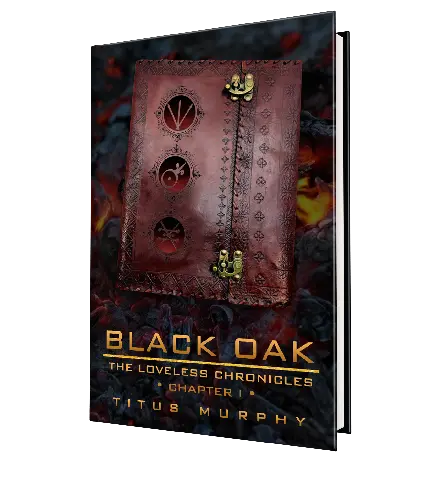
Author Titus Murphy is the author of The Black Oak, the first book in The Loveless Chronicles series. Join us as we learn more about this talented storyteller and the book that is sure to get the attention of Horror fans as it begins to make its way to more and more people.
Tellest: Greetings, Titus! I wanted to thank you for carving out some time to talk about your debut book, The Black Oak, and for letting us take a peek behind the curtain to see how your process works, and how you found yourself writing stories in the first place. I’m sure your readers are going to be excited to learn more about you as well!
Titus Murphy: Thank you so much for having me! I’m thrilled to be here and share a little bit about myself and the story I’ve been working so hard to bring to life. The Black Oak means a great deal to me, and I hope it resonates with horror fans everywhere.
T: So, one of the first things that I like to learn about the authors I interview is what I call a foundational question. We all had to start somewhere when it came to our creative drive, and I’d like to know what yours was. When did you learn that you enjoyed horror or speculative fiction? Did you have a favorite storytelling growing up, whether that was someone in pop culture or within your community?
TM: Stephen King is really where it all started for me. Growing up, his work just pulled me in completely — the way he could take ordinary settings and people and turn them into something deeply unsettling was like nothing else I’d experienced. He showed me that horror isn’t just about monsters; it’s about the human condition, about fear that lives inside us. That realization never left me, and it’s a big part of why I eventually started writing stories of my own.
T: King has a tremendous hold over people and has inspired some of the best storytellers out there. Beyond the content itself, King is also known for some of the technical aspects of the craft, and he shares these in his book On Writing. I like to explore some of this when I talk to fellow fans of his work. To that end, when you’re writing your story, how would you say you “discover” it? Is it something like finding an archaeological dig and sweeping it clean with a toothbrush, or like using spellcraft to summon settings and characters into being? Or is it something completely different in your experience?
TM: For me, it’s absolutely the spellcraft. When I sit down to write, it feels less like uncovering something that already exists and more like calling something forth—summoning characters, settings, and moments out of the aether. There’s a real energy to it, almost like a ritual. I’ll get a feeling, a mood, an image that won’t let me go, and from there the world starts to take shape around it. Living the life I live—long hours on the road, passing through landscapes that most people never slow down to really see—gives me a lot of raw material to conjure from. The bayou especially has that quality where it feels like the veil between the natural and the supernatural is thinner than anywhere else. I pull from that energy when I write. King talks about the story existing somewhere already, waiting to be found, but for me it feels more like I’m the one bringing it into existence—one scene, one character, one dark corner of the world at a time.
T: Because of your travels, you likely see more than just the bayou. Have there been any other sites that really tickled your brain and made their case to be brought to life in literature?
TM: Absolutely. Being on the road as much as I am means I’ve passed through all kinds of landscapes that leave a mark on you. The deep South has so many pockets of strangeness—old towns that feel frozen in time, stretches of highway where the silence gets so thick it feels like something is pressing in on you. I’ve driven through parts of Appalachia that have a haunted quality all their own, and there are areas along the Gulf Coast beyond the bayou that carry a weight and a history that just begs to be explored in fiction. I keep a mental catalog of all these places. They’re all waiting for the right story to call them into life.
T: Let’s jump right into The Black Oak. How did the idea of the story first come to be, and what inspired you to first begin working on it, taking it from the first few pages to a completed tale?
TM: It really grew out of two things that define a big part of my life — my love of horror and my background as a truck driver. I make runs to the bayou regularly, and there’s something about that landscape that just gets under your skin. The Spanish moss, the stillness, the feeling that something is watching from just beyond the tree line. I wanted to capture that atmosphere and build a story that would captivate the minds of readers, something that thrills you but also has real weight and depth to it. Once that seed was planted, the story really took on a life of its own.
T: Did you have the character elements and the human condition kind of queued up in your mind once the setting came into place, or was that something that manifested later as you worked on the story?
TM: The setting always comes first for me. With The Black Oak, the world—that dark, atmospheric landscape—was the spark. Once I could feel that place, once I knew what the air smelled like and what kind of shadows lived there, the characters started to find their way in. It’s almost like the setting calls them forth. They arrive because the world needs them, and their humanity, their flaws and desires and fears, all emerge naturally from the environment I’ve built around them. I don’t think I could write a character in a vacuum. They need a world to press against before I can really know who they are.
T: You touched on some of the sensory details, and that certainly helped to bring your world to life. You also mentioned earlier that you sort of bring your setting to life through spellcraft. When you do that, do you get those sensory details along with it? How do you get those details to feel so rich and layered in a way that leaves your world feeling immersive?
TM: Yes, the sensory details come with the summoning—they’re part of the package. When I conjure a setting, it’s not just a visual. I’m hearing it, smelling it, feeling the humidity or the cold on my skin. I think that comes directly from my time on the road. When you’ve actually stood in a place, your body remembers it in ways your mind doesn’t always consciously register. So when I write the bayou, I’m not imagining it—I’m recalling it on a physical level. That’s what makes it feel layered, I think. The details aren’t invented, they’re remembered. My job as a writer is just to translate that memory onto the page in a way that lets the reader’s body remember it too, even if they’ve never been there.
T: Your debut looks like it absolutely took off on a hot streak. What sort of recommendations would you make to other aspiring writers to help them have a strong debut?
TM: Write the story only you can tell. There are a lot of horror books out there, but none of them come from your experiences, your perspective, your fears. Authenticity is what readers connect with. Beyond that, don’t rush it — let the story breathe and be willing to revise. Find your community, whether that’s beta readers, writing groups, or just people who love the genre. And when it’s ready, put it out there with confidence. You’ve earned it.
T: I’d love to follow up on two things there. You mentioned not to rush the art. How long did you find yourself working on The Black Oak for? Were there ever any frustrations with the process?
You also spoke of finding your community. Everyone’s experience is bound to be different, but who did you find to be your biggest allies and advocates in bringing your book to life?
TM: The Black Oak took about one to two years to bring to completion. And honestly, I wouldn’t trade that time for anything. Every draft, every revision, every late night sitting with the story taught me something new about it—and about myself as a writer. The process was challenging, as any meaningful creative work is, but I approached it with patience and purpose. I knew the story deserved that. When you’re building something you want to resonate with readers, you have to be willing to put in the time and trust the process.
Without question, my family and friends were my foundation. They were the ones who believed in the story before anyone else had a chance to read it. When you’re deep in a creative project and you can’t always see the light at the end of the tunnel, having people close to you who trust your vision and push you to keep going makes all the difference. They were my first readers, my sounding board, and my biggest cheerleaders. I couldn’t have brought The Black Oak to life without them.
T: With this debut done, have you already begun work on the follow-up? Or are you looking in a different direction before the sequel comes out?
TM: Yes, the sequel is already in progress! The response to The Black Oak has been incredibly motivating, and I’m excited about where the story is headed. I don’t want to give too much away, but readers who connected with the first book are going to find the next chapter very rewarding.
T: With the first book taking its time to build to a crescendo, are you finding the pacing for the sequel to come quicker since everything has been established? Or is it still a slow, steady build?
TM: It’s still a slow, steady build—and I think it has to be. That’s just the nature of the kind of story I want to tell. The foundation being in place from The Black Oak does give me certain freedoms, but the pacing of the sequel is its own creature. I’m not rushing it. The dread has to accumulate naturally, the tension has to earn its release. Readers who loved the first book will know what they’re in for, and I intend to honor that trust by giving the sequel the same care and deliberateness that made the first one resonate.
T: Are all the stories in The Loveless Chronicles connected, or do you imagine it being a situation where they can exist as a part of a sort of horror anthology, but not including the same characters and settings?
TM: It’s really a mix of both. There are threads and elements that run throughout The Loveless Chronicles that tie the books together — a shared mythology, recurring themes, certain connections that attentive readers will pick up on. But each book is also designed to stand on its own, so a new reader can pick up any entry and have a complete, satisfying experience. I love the idea of a universe that rewards loyal readers while still being welcoming to newcomers.
T: With that in mind, do you ever see yourself going backward in time to drop little easter eggs that can pay off in the books that you’ve already released?
TM: That’s something I’ve been turning over in my mind, and I won’t rule it out. There’s something really exciting about the idea of rewarding readers who have been with The Loveless Chronicles from the beginning—little hidden threads that suddenly make sense once you’ve read further into the series. It’s the kind of thing that makes a fictional world feel truly alive and intentional. I’m still thinking through how and where that might work, but I love the concept, and fans who go back and reread might find themselves pleasantly surprised down the road.
T: With this first book wrapped up, you’re no doubt going to have fans who are absolutely excited to see what comes next from you. Do you have a place that you would recommend your readership head to, like a website, or a social media channel, if they wanted news about your releases?
TM: The best place to find me and learn more about The Black Oak is my book page at cosbymediaproductions.com. That’s where you’ll find the latest news, updates on the sequel, and everything you need to dive into The Loveless Chronicles. I hope to see you there!
T: Titus, I wanted to thank you for sharing some of your time with me and your readership to allow us into your world. I know you’re incredibly busy, so being able to chat between those busy times felt like a wonderful opportunity. I’m excited for the new fans that are going to find their way to you, and even more so for the fans that are already rooting for you, and are eagerly awaiting the sequel and your other works!
TM: Thank you so much—this has been a genuine pleasure. I appreciate you taking the time to dig into not just the book but the process behind it. That means a lot to a writer. To anyone reading this who is just now discovering The Loveless Chronicles, welcome—I think you’re going to enjoy the ride. And to the fans who have already been along for the journey, thank you from the bottom of my heart. Your support is what keeps the fire burning. The sequel is coming, and I promise it will be worth the wait. You can keep up with everything at cosbymediaproductions.com.
T: I’d like to once again thank Titus Murphy for spending his time with us talking about his work and his process. It’s always a delight to find someone who is passionate about their creative arts, and I know that our storyteller in this interview had to find time before busy road trips to share those parts of himself. For those who are interested in a rich horror with tremendous character, don’t hesitate to pick up Murphy’s new release. Check out Black Oak: The Loveless Chronicles on Amazon today!


Michael DeAngelo
Latest posts by Michael DeAngelo (see all)
- Historical Fantasy Promo – Under the Black Ensign: A Pirate Adventure of Mutiny, Freedom and High-Seas Action - October 1, 2026
- Sci-Fi Promo – DISCONNECTED: A Prison. A Paradise. Two Souls. - September 29, 2026
- Dark Fantasy Promo – Ascaron: Ad Vocatus, part. 1 - September 25, 2026