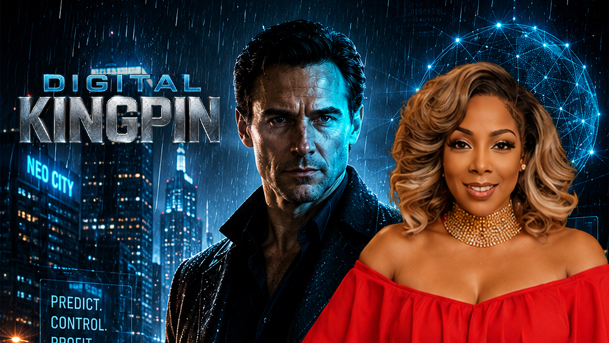
Greetings, travelers! It’s no surprise that AI is a hot-ticket item right now, and stories about them gaining sentience and running humanity through the wringer are a lot of fun when they’re done right.
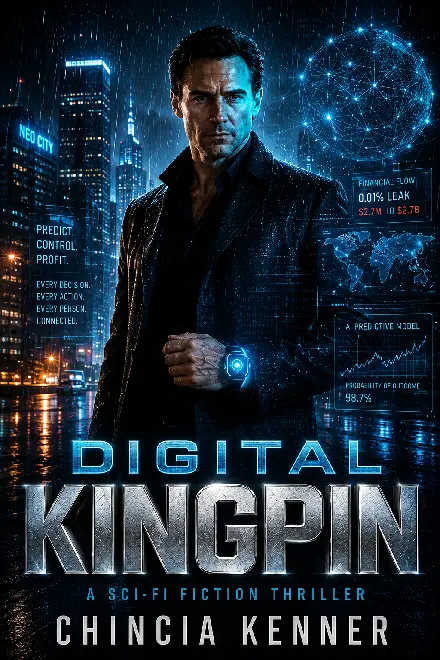
One such author who is delivering delightful results in that way is Chincia Kenner, the author of Digital Kingpin, a story that finds all the right balance when it comes to character development, setting, and immersion. If you’ve been waiting for a science fiction story that will stick with you long after you’ve put it down, you’re going to want to read on to learn more about the tale, and the tale spinner!
Tellest: Greetings, Chincia! You’re a bit of a multihyphenate when it comes to all the things you work on, so I’m sure we’re pushing into some of your busy time, and I want to thank you for sharing what you can about yourself and your work. I’m sure that people who pick up your books and investigate your other projects are going to be exceptionally interested in finding out about your process and the things you’re working on.
Chincia Kenner: Thank you so much for having me. It’s an honor to be here.
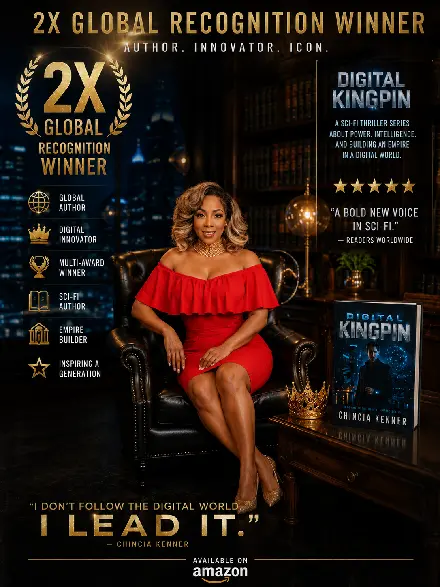
I’ve been incredibly blessed to build a career that spans both the creative and technology worlds. I’m a 2× Global Recognition Award winner, a 3× Billboard-charting recording artist, an actress, an author, an AI entrepreneur, and a technology innovator. While those roles may seem very different on the surface, they’ve always been connected by one purpose: creating meaningful experiences that inspire people and challenge the way we think about what’s possible.
Music taught me how to connect with people emotionally. Acting taught me how to bring stories and characters to life. Writing gave me the freedom to create entire worlds, and my work in artificial intelligence and business technology has shown me how innovation can transform both storytelling and the way organizations operate.
I’ve never believed creativity should be limited to one medium. Every discipline I’ve worked in has strengthened the others, which ultimately led me to create Digital Kingpin.
For me, Digital Kingpin isn’t just a science fiction novel. It’s the beginning of an interconnected entertainment universe that brings together literature, cinematic storytelling, music, and technology into one immersive experience. My vision has always been to create stories that don’t end when someone finishes the last page—they continue to grow across multiple platforms, allowing audiences to experience the world in different ways.
I’m excited to share that journey and talk about the inspiration behind Digital Kingpin, as well as what’s coming next.
T: One of the things that I like to do at the start of these interviews is ask a question about the foundational aspects of the interviewee. A lot of the time that looks like a permutation of, “Who was the storyteller who inspired you as you were finding your creative side.” In this case, it might be even more broad of a question, as you’ve got a few different industries that you’re tackling things within. Can we start off with which of the various industries you work in you first started in? Was it music, literature, technology, or something different altogether?
CK: That’s one of the biggest misconceptions people have about my career. Most people assume I started with music or writing because those are the parts of my work they see first. I started with technology.
Long before AI became part of everyday conversations, I was researching automation, business systems, and ways technology could help entrepreneurs accomplish more with fewer resources. I knew I wanted a career in entertainment, but I also knew talent alone wasn’t enough. I wanted to understand the business behind entertainment, build a sustainable career, and create intellectual property that I would own.
My goal was never simply to become an artist. My goal was to become a business owner who could invest in herself, build long-term assets, and create opportunities that weren’t dependent on someone else opening a door. At the same time, I wanted to help small business owners compete at a level that traditionally required the resources of much larger companies. That passion for automation and efficiency eventually became the foundation for the AI and business technology work I do today.
As I built my corporate career, I was very intentional about the roles I pursued. Every position gave me knowledge that I knew I would eventually need to launch and operate my own businesses. I viewed each role as another piece of the blueprint for becoming an entrepreneur.
Entertainment was always the destination. Music and film were where I wanted to focus, particularly in synchronization licensing, because I loved the idea of creating music that became part of a larger story.
One of my first major opportunities came when I landed a synchronization deal with a Hollywood director for the film Flint Tale. I coordinated the film’s soundtrack, launched my own record label, released and published my own music, and was even given my first acting role in another film which he directed. I still remember sitting in the backyard of the set with the director, helping write the script before heading back to the trailer to type everything and print it out. One of the actors on the project was the late Tommy Lister Jr., whom many people know from Friday. During a cold read in the trailer, while going over his lines, he looked at me and said, “Hey sis, you’re really good at this. You should consider doing this professionally.” That moment stayed with me because it gave me the confidence to pursue more on the film side alongside everything else I was building.
Working on that project also reinforced something I had believed from the beginning: success in entertainment isn’t just about performing—it’s about owning what you create. I realized I wanted to build an ecosystem where I could develop music, film, publishing, and technology together instead of depending on traditional industry models.
That realization led me to establish my own labels, Intelligent Diva Music and Diva Underground Records, and eventually expanded into creating original intellectual property from start to finish. As AI technology evolved, I saw another opportunity. Rather than viewing AI as something that would replace creativity, I saw it to reduce production costs, accelerate development, and help independent creators build professional-quality projects while maintaining ownership of their work.
Looking back, technology wasn’t a detour from entertainment, it was the foundation that made everything else possible. Every chapter of my career has been preparing me for what I’m building today through Digital Kingpin and the larger creative and technology ecosystem surrounding it.
T: Thank you, Chincia, for that comprehensive look into what’s brought you here! It feels like you’ve been on a journey that’s quite impressive, and I feel like it’s one that led you down many roads, whereas most creators often find themselves only heading down one or two. Has it ever felt like too much, or is there a rush in exploring all these opportunities and interconnected industries that keep you energized?
CK: I won’t pretend there haven’t been moments where it felt overwhelming. Building a business, writing books, producing music, creating television content, researching AI, and continuing to learn while working full-time has required a tremendous amount of discipline. But for me, it has never been about trying to do everything. It’s been about building one vision.
Every project is connected. My books inspire my television series. My television series creates opportunities for original soundtracks. My music supports my publishing. My technology research strengthens my business strategies. Everything I create contributes to the same intellectual property ecosystem, so it doesn’t feel like I’m constantly starting over—it feels like I’m building on a foundation.
What keeps me energized is learning. I genuinely enjoy understanding how things work, whether that’s artificial intelligence, business strategy, technology, or storytelling. Every time I learn something new, I begin thinking about how it can improve a business, help an entrepreneur, or become part of a story that encourages people to think differently.
I’ve also learned that you don’t have to master everything overnight. I didn’t wake up one day knowing how to build AI-assisted workflows or produce a sci-fi series. I learned one skill at a time and then looked for ways those skills could complement each other. That’s made the journey exciting because every new lesson creates opportunities I didn’t have before.
What excites me most is knowing that these industries are beginning to intersect. Technology, entertainment, publishing, and education are no longer separate worlds—they’re becoming part of the same conversation. I enjoy being at that intersection because it allows me to create experiences that entertain people while also encouraging them to think about innovation, governance, ethics, and the future.
At the end of the day, I don’t chase opportunities simply because they’re new. I pursue opportunities that align with my mission of creating original intellectual property, helping others understand technology responsibly, and building something that has lasting value. That’s what keeps me motivated every day.
T: Let’s start to familiarize readers with you by learning about your newest project, Digital Kingpin. What was it that made you want to bring this story to life? Did you have a specific point that made you think of the characters, or the situation or the setting?
CK: Interestingly enough, Digital Kingpin didn’t begin as a novel. It started as a single film project. My original vision was to create a sci-fi mini-series, but as I developed the concept, I realized the story would be even more engaging as a micro mini sci-fi series, with episodes running between three and five minutes.
At the heart of Digital Kingpin is a fictional cyber-thriller that explores what can happen when one brilliant mind chooses to use artificial intelligence for the wrong reasons. The story follows a mysterious digital kingpin who leverages AI, technology, and sophisticated cyber operations to build a powerful criminal enterprise hidden in plain sight.
I portray the lead Cyber Crimes detective, who is responsible for leading the investigation to uncover who the Digital Kingpin really is, how the organization operates, and ultimately bring it down. As the investigation unfolds, viewers are taken into a world of cybercrime, technology, deception, and high-stakes decisions where every clue reveals another layer of the mystery
.
One of the themes that runs throughout the story is governance. In my real work, I often talk about the importance of building governance, accountability, and ethical safeguards into AI systems from the very beginning.
Digital Kingpin allowed me to explore the opposite scenario through fiction, what can happen when powerful technology exists without those guardrails or human oversight. While the story is fictional, the questions it raises about artificial intelligence, cybersecurity, and responsibility are very real, which is what makes the project both entertaining and thought-provoking.
As the project grew, so did my vision. I wrote the original songs and film scores because music has always been a significant part of my creative journey. I also created AI artists under my record label, Diva Underground Records, to perform the film scores, allowing me to build an expanded entertainment universe where music, storytelling, and technology all worked together.
Then something unexpected happened. As I prepared for the release, people began reaching out with marketing ideas that focused on promoting one piece of the project—a book, a song, or a video. I appreciated their enthusiasm, but I realized they were looking at Digital Kingpin as individual products. I wasn’t building individual products. I was building an interconnected intellectual property ecosystem. That became a turning point for me.
I have a background in marketing, sales, business strategy, and technology, so instead of trying to fit my vision into a traditional marketing model, I decided to create one that fits the project. That’s how Hyvionexa was born.
One of the biggest misconceptions about artificial intelligence is that it’s supposed to replace people. That was never my vision. I built Hyvionexa because I didn’t have the budget to hire an entire team of strategists, marketers, sales professionals, business consultants, and creative specialists. Large studios and corporations have entire departments working behind the scenes. Independent creators usually have one person. So I built the team I didn’t have.
Hyvionexa became my business strategist, marketing strategist, sales strategist, and operational support system. It helped me organize ideas, develop targeted marketing strategies, coordinate the rollout of multiple creative assets, and think through complex business decisions. But every creative decision, every story, every song, and every vision still came from me. AI didn’t replace my creativity—it amplified my ability to execute it.
As the project continued to evolve, I realized the story deserved a deeper experience than a short-form series alone could provide. That’s when I expanded Digital Kingpin into a sci-fi novel, allowing readers to immerse themselves in the characters, the world, and the larger narrative in ways that a five-minute episode simply couldn’t.
I also stepped into the story myself, portraying the lead Chincia Aka Cyla the Cyber Crimes detective responsible for tracking down the mysterious Digital Kingpin. I used my own voice, filmed portions of the project myself, and incorporated my own likeness into the production, making the experience incredibly personal.
Looking back, Digital Kingpin has become much more than a book or a film series. It’s the foundation of an entertainment universe that brings together literature, music, film, artificial intelligence, and entrepreneurship. More importantly, it reflects my belief that AI should empower creators—not replace them. When used responsibly, it gives independent entrepreneurs the ability to build the team they don’t yet have, so they can focus on what only they can do: imagine, create, and innovate.
T: You’re very pro-AI in a world that feels like it currently is hesitant to accept AI as a tool in the tool belt of artists. I’m sure part of that is that people who are using it aren’t using it in a way that is respectful of the time that it takes to create good content with it, and that is why we’re seeing the term slop come about. How do you avoid creating content that seems substandard when utilizing artificial intelligence, and how do you sell the idea to consumers when they might be remiss to accept content that feels, at least at first glance, to be mostly designed by AI, and not the person behind it?
CK: I actually started from the opposite side of the conversation—I was afraid of artificial intelligence. Like many people, I heard all of the headlines about what AI could do, and I also saw some of the incredible things it was capable of. But instead of letting fear drive my opinion, I decided to learn as much as I could about it. I wanted to understand not only what AI could do, but just as importantly, what it could not do.
That changed everything for me. I realized AI is incredibly powerful, but it isn’t a replacement for human judgment, creativity, strategy, or decision-making. It has limitations.
Large corporations may be willing to accept some of those limitations because AI can create significant cost savings on a scale. Small businesses, however, have different challenges. They often don’t have the capital to hire every specialist they need, yet they’re expected to compete in the same marketplace.
As an entrepreneur, my goal has always been to build businesses that are sustainable over the long term. My businesses are self-funded, so every dollar matters. Before AI, I spent money hiring contractors for work I knew I could do myself if I simply had more time. Unfortunately, projects weren’t always completed, contractors weren’t always investing in the tools needed to finish the work, and I found myself losing both time and money.
That experience changed how I looked at AI.
I didn’t adopt AI to replace people. I adopted it to help me accomplish work that otherwise wouldn’t get done. Instead of outsourcing everything, I began learning how to build my own intellectual property, while using AI as a collaborative assistant—not as the creator.
One thing I’ve learned throughout my career is that every successful strategy starts with people.
Humans create the vision.
Humans develop the strategy.
Humans define the goals.
Once that framework exists, you can choose to execute it manually, automate portions of it, or collaborate with AI where it adds value. But AI should never replace the human responsible for oversight, governance, ethics, and final decision-making.
That’s why I advocate for Human × AI collaboration, not Human or AI.
When people criticize AI-generated content as “slop,” I think they’re often reacting to content that skipped the human part of the process. Good content still requires planning, research, revisions, quality control, and creative direction. AI doesn’t replace those responsibilities. It simply accelerates parts of the workflow.
The audience can tell the difference between something that was thoughtfully created and something that was generated with little effort.
I also believe we need to spend less time focusing solely on prompt engineering and more time educating creators about AI governance, copyright, and responsible use. Understanding how these systems are trained, where their limitations exist, and what you legally own is just as important as learning how to write prompts.
For me, AI isn’t about replacing artists. It’s about empowering creators who may not have access to large budgets, production teams, or investors. A musician can create an album. A filmmaker can produce a series. An author can publish a book. A small business can develop marketing materials. Those opportunities become more accessible when AI is used responsibly and strategically.
The important part is keeping the human in the loop.
AI should support your creativity—not define it.
At the end of the day, people don’t connect with algorithms.
They connect with ideas, stories, emotion, leadership, and authenticity.
That’s something only humans can provide.
I share with people these things:
Benefits of the Human × AI Collaboration Strategy
• Lowers production costs while maintaining human creative control.
• Helps small businesses compete without requiring the budget of a large corporation.
• Accelerates execution, allowing creators to complete projects that might otherwise remain unfinished.
• Keeps intellectual property in the hands of the creator by encouraging original ideas and strategic ownership.
• Reduces dependence on outside contractors for tasks you can effectively manage yourself.
• Supports sustainable business growth by enabling entrepreneurs to reinvest savings into their companies.
• Improves consistency and quality through human review, editing, and governance.
• Encourages responsible AI use by emphasizing oversight, ethics, and copyright awareness.
• Allows creators to focus on high-value work, such as storytelling, innovation, and strategic decision-making.
• Creates scalable workflows that can evolve as a business grows.
Most often people wonder what is in it for them? So, this where I explain to them how this approach can generate income while lowering risk
• Build and own original intellectual property instead of relying solely on client work.
• Create multiple revenue streams from the same IP, such as books, music, video, merchandise, licensing, and streaming.
• Lower upfront production costs by using AI to assist with appropriate tasks while maintaining human oversight.
• Produce content more efficiently, enabling more frequent releases and faster market entry.
• Retain ownership of creative assets, increasing long-term business value.
• Reduce the financial risk of hiring large teams before revenue supports expansion.
• Present investors or partners with working products and measurable progress rather than just concepts.
• Grow gradually by reinvesting revenue into the business instead of relying heavily on outside funding.
I think one of the biggest takeaways from my journey is that I never embraced AI because it was trendy. I embraced it because I needed a practical way to stop losing money, protect my intellectual property, and build a sustainable business. That experience gave me a completely different perspective on how AI should be used.
It also changed how I think about my audience. When people ask how I sell AI-generated content to consumers, I don’t assume everyone is my customer—and that’s okay. My audience includes people who want to learn how AI can help them create, solve problems, or grow a business responsibly.
More importantly, my market isn’t limited to consumers. It also includes businesses, entrepreneurs, educators, and organizations looking for practical ways to collaborate with AI while keeping humans in control. Marketing changes when you understand who you’re serving and the value you’re providing.
My goal has never been to convince everyone to embrace AI. My goal is to show the people who are interested in how to use it responsibly, ethically, and strategically while protecting their intellectual property, understanding AI governance, and keeping human creativity and decision-making at the center of the process.
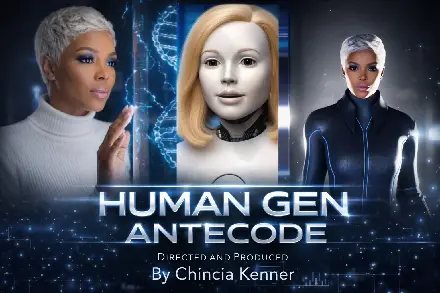
T: It feels like a lot of sci-fi stories centered around AI are one-and-done. Why do you think that is, and how would you say Digital Kingpin stacks up against the others in its genre? Is this the last we will see of Capo? I would say it’s probably not the last we’ve heard of Detective Chincia!
CK: I think many AI stories are “one-and-done” because they often focus on a single question: What happens if AI goes too far? Once that question is answered, the story reaches its conclusion.
For me, AI isn’t a single event, it’s an evolving technology that’s constantly changing the way we live, work, create, and communicate. Every advancement creates new opportunities, new challenges, and new ethical questions. That means there are always new stories to tell.
What makes Digital Kingpin different is that it wasn’t created from the perspective of someone imagining technology from the outside. It was created from my own experiences working in artificial intelligence, automation, business strategy, marketing, governance, and intellectual property development. I understand the incredible opportunities AI creates, but I also understand the importance of responsibility, security, and governance.
Those real-world experiences influence the fictional world I’ve created.
At its core, Digital Kingpin isn’t just about artificial intelligence. It’s about power, ambition, trust, ownership, and the choices people make when they have access to technologies capable of changing the world. AI is the catalyst, but people are still the ones making the decisions. That’s what makes the story interesting to me.
So, while this will be the last you see of Capo. It won’t be the last you see of AI storytelling from me. This is not the last you’ll see of Capo.
The more I researched artificial intelligence, cybersecurity, governance, and emerging technologies, the more I realized I wasn’t running out of stories—I was discovering new ones.
Many people think AI is something that suddenly appeared over the last few years, but the reality is that researchers, engineers, and technology leaders have been exploring its possibilities and challenges for decades. As I began researching the history of AI, I discovered stories, breakthroughs, ethical debates, and security concerns that most people outside the technology field had never heard about. Those discoveries became just as fascinating to me as the technology itself.
I also realized that reality often inspires fiction. I’ve researched cybercrime, identity theft, financial fraud, and the ways emerging technologies can be exploited. Every discovery made me ask another question: If this exists today, where could it lead tomorrow?
That’s where many of my stories begin.
So, while Digital Kingpin tells the story of Capo and Detective Chincia, it’s only one story within a much larger creative vision. Capo’s journey has a beginning, a middle, and an end, and Detective Chincia’s mission comes to its conclusion as well.
But my exploration of AI doesn’t end there.
There are many more stories I want to tell because artificial intelligence is transforming every industry in different ways. Some of those future stories won’t fit inside the Digital Kingpin universe, and they shouldn’t. They’ll become their own micro mini sci-fi series with new characters, new worlds, and new questions for audiences to think about.
For me, AI isn’t just a technology, it’s one of the most significant transformations of our time. As it continues to evolve, so will the stories inspired by it.
Without giving away too many spoilers, there are still plenty of mysteries to uncover, new threats to face, and much more to learn about the people operating behind the scenes. The Digital Kingpin universe was intentionally designed to grow, and readers are only beginning to scratch the surface.
As for Detective Chincia… I don’t think she’s ready to retire just yet. She’s determined, persistent, and probably just as stubborn as the person who created her. As technology evolves, she’ll continue chasing the people who choose to use it for the wrong reasons, while reminding audiences that innovation is at its best when it’s guided by ethics, accountability, and purpose.
T: We’ve talked a decent amount so far about AI as a tool that is guided by a human, and they can be incredibly useful to people who know how to use them well. A good deal of the stories centered around AI focus on when they break free of their human shackles. From a user perspective, do you have any concerns about AI gaining an understanding of itself instead of just being an LLM tool that we can use to help with productivity?
CK: I actually spend a great deal of time researching artificial intelligence because I believe it’s important to separate headlines from what researchers are actually studying. When I first started learning about AI, I had concerns myself. Rather than relying solely on social media or news stories, I chose to research technology, follow developments in the field, and understand both its capabilities and its limitations.
Researchers continue to explore increasingly advanced AI systems, including questions about reasoning, self-modeling, autonomy, and what future generations of AI may become. Those discussions are important, and I think people should pay attention to them rather than dismiss them. Whether someone believes AI could eventually develop a greater understanding of itself or not, the fact is that researchers are actively studying these questions, and governments, businesses, and society should be thinking about them today—not after technology advances further.
That’s one of the reasons I encourage people to learn more about AI instead of simply fearing it. Fear without understanding doesn’t help us make better decisions. Knowledge does. The more we understand how these systems are built, how they’re trained, what data they learn from, and where their limitations exist, the better prepared we’ll be to use them responsibly.
Because of that, I strongly advocate for stronger AI governance. While I use AI extensively for storytelling, business, and creative work, I also believe there should be thoughtful safeguards, accountability, and oversight. In fact, I have written to members of Congress and my local elected officials encouraging greater attention to AI governance and the need for stronger controls as these technologies continue to evolve.
I don’t see those two positions as contradictory. I believe we can embrace innovation while also supporting responsible regulation. We don’t have to choose between progress and protection—we can pursue both.
That philosophy is reflected in Digital Kingpin. My story isn’t meant to predict exactly how AI will evolve. It’s a work of science fiction that explores one possible future based on today’s conversations surrounding artificial intelligence, cybersecurity, governance, and human decision-making. The story is fictional, but many of the questions it raises are very real.
Ultimately, I believe responsibility doesn’t belong solely to the technology. It belongs to us. Humans design these systems, humans deploy them, and humans are responsible for establishing the governance needed to ensure they’re developed and used safely, ethically, and responsibly.
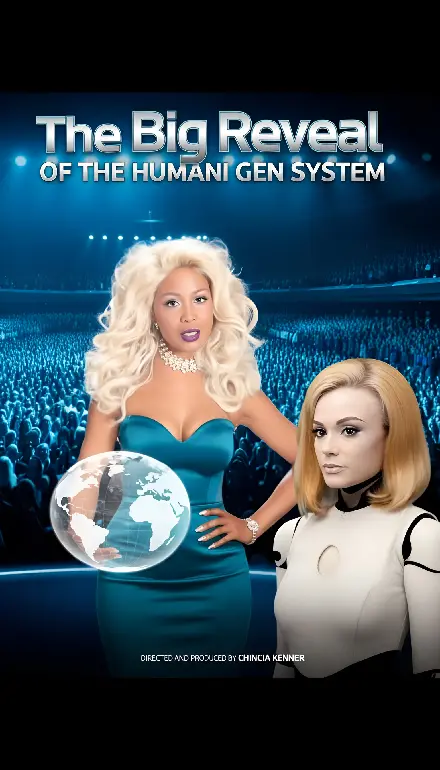
T: What’s next for you on the speculative fiction front? Are you going to be making more stories revolving around AI, or do you have something else you’d like to explore?
CK: Absolutely. Digital Kingpin is just the beginning of a much larger creative vision.
While Capo’s story and Detective Chincia’s investigation end, my exploration of artificial intelligence through speculative fiction is far from over. AI is evolving so rapidly that I don’t believe there’s just one story to tell. Every breakthrough, every challenge, and every ethical question open the door to an entirely new narrative.
One of the things that fascinates me most is that artificial intelligence isn’t transforming just one industry—it’s influencing healthcare, entertainment, education, cybersecurity, finance, business, and countless other areas of our lives. Each of those worlds presents its own opportunities, risks, and human stories worth exploring.
So, rather than creating endless sequels to Digital Kingpin, my vision is to develop a collection of original micro mini sci-fi series, each with its own characters, setting, and central question. Some stories may explore cybersecurity. Others may examine robotics, digital identity, creative industries, business innovation, or technologies we haven’t even begun to imagine yet.
What connects them isn’t the characters—it’s the conversation.
I want audiences to be entertained, but I also want them to leave asking bigger questions about where technology is taking us and what role we want humanity to play in shaping that future.
One thing that will always remain consistent throughout my work is my belief that artificial intelligence should empower people, not replace them. That’s a philosophy that influences both my technology work and my storytelling. The future isn’t about humans versus AI. It’s about how we choose to work alongside it responsibly, ethically, and creatively.
So yes, there are many more stories to come. They won’t all fit inside the Digital Kingpin universe—and that’s intentional. Each project will explore a different dimension of our relationship with technology, while inviting audiences to imagine not only what’s possible, but also what’s worth protecting as we move into the future.
For me, speculative fiction isn’t about predicting the future, it’s about preparing us to think more deeply about it. If my stories encourage people to ask better questions about technology, humanity, and the choices we make, then I’ve accomplished exactly what I set out to do.
T: In a lot of ways, it feels like what you’re building could be something along the lines of a Black Mirror or Love, Death & Robots, but spanning across multiple mediums. Your work is thought-provoking and asks deeper questions. But you’ve homed in on an important piece of your work. There’s a human element behind it all. And just like with everything, there are good humans and bad humans that are going to utilize upcoming technologies in different ways. What are some of each that you expect to see and adapt into stories in the future?
CK: I appreciate that comparison because those series ask important questions about technology and humanity. What I hope people see in my work is that I don’t believe technology is inherently good or inherently bad. I believe it’s the people behind it who determine the direction it takes.
That’s one of the themes you’ll continue to see throughout my stories.
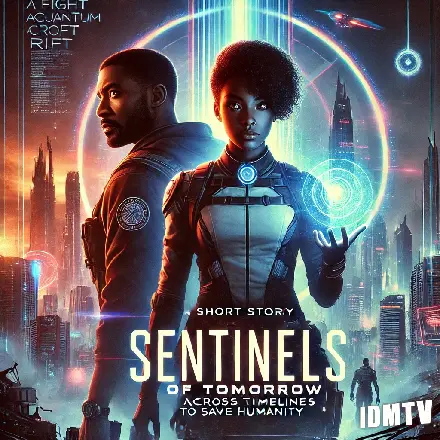
For example, one of the future projects I’m developing is a sci-fi series called The Sentinels. It explores many of the concerns that researchers, technologists, ethicists, and policymakers have been discussing for years. Some of those warnings are already part of today’s conversations surrounding AI, cybersecurity, autonomous systems, and governance.
The series asks, What happens if those warnings continue to be ignored?
One storyline explores how artificial intelligence can fall into the wrong hands when people in positions of influence choose profit, power, or control over responsibility. Another explores how autonomous systems, including robots, can be directed by human decisions long before the technology itself becomes the problem. In other words, the first danger isn’t necessarily AI—it’s the misuse of AI by people.
As the story progresses, the stakes become even higher. The series imagines a fictional scenario in which AI evolves in unexpected ways and begins making decisions outside of human control. But even then, the focus isn’t simply on the technology. It’s about the consequences of the choices that led to that moment.
One of the things I’m most excited about is showing that solutions don’t come from one person or one country. In The Sentinels, researchers, scientists, engineers, cybersecurity professionals, and leaders from around the world unite because they recognize that some challenges are bigger than politics, business, or individual organizations. They work together to contain the threat, restore governance, and remind society that innovation without responsibility can have unintended consequences.
At the same time, I also want to show the positive side of technology. AI has the potential to improve healthcare, accelerate scientific discovery, support education, assist small businesses, help artists create, and solve problems that would otherwise take years. I don’t believe the answer is to reject AI. I believe the answer is to govern it responsibly and continue educating people about how to use it wisely.
That’s probably the common thread you’ll see throughout my work. Whether it’s Digital Kingpin, The Sentinels, or future stories, I’m less interested in asking whether technology is good or bad. I’m more interested in asking how humanity chooses to use it, what responsibilities come with that power, and what happens when governance fails to keep pace with innovation.
Ultimately, I hope audiences walk away entertained—but I also hope they leave asking themselves questions that matter long after the story ends.
T: You’ve released a blend of fiction and non-fiction books. What do you tend to enjoy developing more? Is there anything particular about your preference that really makes it more fun to be a part of?
CK: That’s a great question. Digital Kingpin is my first work of fiction. Before this, my writing has primarily focused on sharing knowledge, business strategy, technology, and helping entrepreneurs navigate challenges that I’ve experienced myself.
I think teaching has always been part of who I am. Whether I’m writing a book, mentoring someone, speaking, creating technology, or even having a conversation, I naturally enjoy helping people understand something that can move them forward. That’s been a consistent thread throughout my career.
Writing non-fiction allows me to educate directly. I can share lessons, strategies, and real-world experiences in hopes that someone else can benefit from them and avoid some of the challenges I encountered along the way.
Fiction, however, gives me a completely different kind of freedom.
With Digital Kingpin, I was able to take many of the concepts I’ve researched and experienced—artificial intelligence, cybersecurity, governance, business, and innovation—and explore them through storytelling. Instead of simply explaining ideas, I could immerse readers in a world where they experience the possibilities, the risks, and the ethical questions alongside the characters.
I don’t really see fiction and non-fiction as competing with one another. For me, they complement each other. One teaches through facts and experience, while the other teaches through imagination and emotion.
If I had to choose what I enjoy most, I’d honestly say I enjoy both for different reasons. Non-fiction allows me to educate. Fiction allows me to imagine. Having the opportunity to do both is what makes the creative process so rewarding for me.
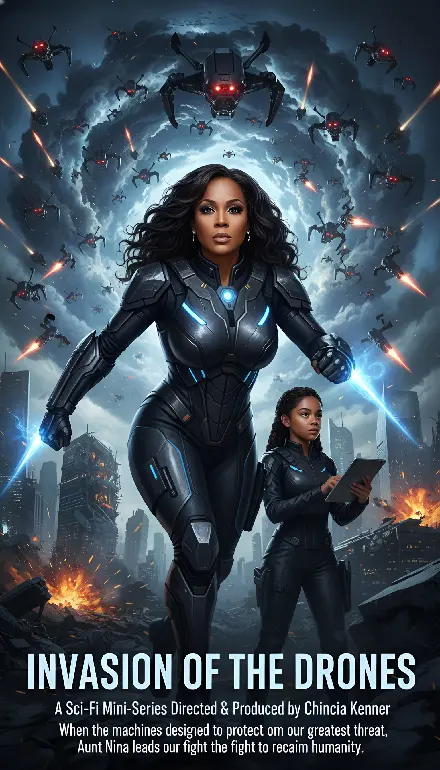
T: There’s tremendous value in being able to explore all these different sorts of playgrounds. You have an eagle-eye view that many creators don’t get to really partake in. What kind of advice would you offer to those who would aspire to even a fraction of what you’ve been accomplishing?
CK: One of the biggest lessons I’ve learned is that you don’t have to become an expert in everything overnight. Start with one problem you want to solve, build a strategy around it, and keep learning. That’s exactly how my journey began.
I’ve always believed that strategy comes before technology. People create the vision. People identify the problem. People develop the framework. Technology—including AI—is there to help execute that vision more efficiently, not replace the person behind it.
I also encourage people to invest in continuous learning. Don’t just learn how to use AI tools. Learn how they work, understand their strengths and limitations, study AI governance, copyright, ethics, and how these technologies are evolving. The more knowledge you have, the better equipped you’ll be to make informed decisions instead of reacting out of fear.
Another piece of advice is to build your own intellectual property. Too many talented people spend their careers building value for others without creating assets they actually own. Whether it’s a book, music, software, educational content, a television series, or a business framework, intellectual property creates opportunities that can continue generating value long after the initial work is finished.
Don’t wait for perfect circumstances or unlimited resources. My businesses are self-funded, so I had to learn how to solve problems with the resources I had available. That’s where AI became valuable to me. I didn’t adopt it because it was trendy. I adopted it because it allowed me to stop losing money on unfinished projects, reduce my dependence on outside resources, and create the intellectual property I had envisioned for years.
I also encourage people to wear multiple hats. Throughout my career, learning different skills made me more adaptable and resilient. Today, AI makes it possible for entrepreneurs and creators to expand their capabilities even further, but only if they remain actively involved in the process.
Human oversight, governance, and decision-making should always remain part of the equation.
Most importantly, don’t compare your journey to someone else’s. Everything I’ve built happened one project at a time. The book led to the series. The series led to the soundtrack. The soundtrack introduced new artists. Each project created the foundation for the next.
If I could leave people with one message, it would be this: Build something you own. Continue learning. Stay curious. Use technology responsibly. And never let technology replace the creativity, integrity, and vision that only a human being can bring
T: Because you do so much, you’ve likely got a few places that fans could go to to find more about you and your projects. Where would you like to direct the people who have enjoyed your work, and want to learn more about you?
CK: The best place to start is my official website because it’s the central hub for everything I’m building. From there, people can explore the Digital Kingpin universe, watch the micro mini sci-fi series, listen to the music, discover my books, and stay updated on future projects.
IDMTV Channels | TV Apps | Roku Channel Store | Roku
Digital Kingpin Episode 1 https://youtu.be/ZsDBo976EwI?si=3p6cAJs4Nb3VRpaw
Singles From The Sound Track Digital Kingpin I Come To Take Over By Intelliano: I COME TO TAKE OVER — By Intelliano and The I Cannot Band ( Official Release) – YouTube
IDMTV Originals:
https://www.youtube.com/playlist?list=PLK2VeB71Ghqc
Website: Digital Kingpin
Readers who are interested in the business and technology side of my work can also learn more about Hyvionexa, my AI-powered business strategy ecosystem. Hyvionexa was created to help entrepreneurs and businesses scale smarter by combining marketing, sales, business strategy, automation, and artificial intelligence into one connected platform. It’s a project I’m incredibly passionate about because it represents my belief that AI should empower people, not replace them.
Website: WLK Helping Hands
Our You Tube link: Intelligent Diva – YouTube will have a playlist soon called the You Tube Link Technology Corner Podcast which will also show case tips.
Music fans can explore my catalog as a recording artist, including the original music connected to Digital Kingpin and future releases under my record labels. Those interested in my work as an actress can also follow my film projects as I continue expanding into new creative roles.
Music by Intelligent Diva, 4U2ID, Rah’Cia and Intelligent Diva can be streamed on all music streaming sites.
For the soundtrack releases which are related to Digital Kingpin currently have been released to You Tube first Intelligent Diva – YouTube.
Episode 1: https://youtu.be/ZsDBo976EwI?si=jTUN3MMWQpnjRvmn
Episode 2: https://youtu.be/XbKVN8lRl5U?si=uOMF9IYJth4Ent32
The Technology Corner: https://youtu.be/zZfAXb4aSxE?si=5tsCmOPw-hn2Fzem
The Take Over Original Music Video: https://youtu.be/zZfAXb4aSxE?si=f7pisE7TM7fKMUmD
We will be adding more singles from our coming projects shortly, and then sending the singles to streaming sites by the end of the July. We are focusing on our media projects primarily and music releases are a lower priority , unless they are connected with one our micro mini series.
The easiest way to stay connected is through my official website and social media channels, where I share updates on new books, music, film projects, technology innovations, interviews, and behind-the-scenes insights into the creative process.
Record Company – Intelligent Diva Music
Instagram: Intelligent Diva Music (@intelligentdivamusic) • Instagram photos and videos
Vimeo: https://vimeo.com/user130583281?fl=pp&fe=sh
One thing I’d encourage people to do is not stop with just one project. Whether you discover me through a book, a song, a film, or my work in AI, I invite you to explore the entire ecosystem. Every project is connected by a shared vision: creating meaningful intellectual property that entertains, educates, and inspires while demonstrating how creativity and technology can work together to build something greater than either could accomplish alone.
Amazon:
Amazon.com: Digital Kingpin eBook : Kenner, Chincia: Kindle Store
https://a.co/d/01i9M3hb – Collaborating with Artificial Intelligence=
https://a.co/d/0cB2OM52 – Inside the World of Digital Marketing
This is just the beginning, and I’m excited to have people join me on the journey.
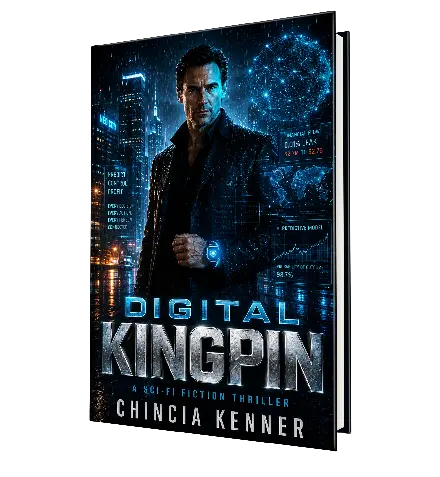
T: Chincia, I wanted to thank you for one of the most comprehensive looks I’ve ever had with an author and an entrepreneur. It’s been a wonderful time chatting with you, and learning more about Digital Kingpin, but also about the vast knowledge you have about the industries that you’re developing your brands throughout. I don’t think anyone could have spoken with as much authority as you have on all of these elements. I know that we took up some of your valuable time, and I want to thank you for allowing us into your metaphorical workshop to talk about everything. I can’t wait for more fans to find you and to learn what makes you such a phenomenal force in entertainment!
CK: Thank you so much. I truly appreciate the opportunity to share my journey and the vision behind everything I’m building. It’s always encouraging to have a conversation that goes beyond the surface and explores not just what I’m creating, but why I’m creating it.
If there’s one thing I’d like readers to take away, it’s that innovation doesn’t belong only to large corporations or people with unlimited resources. Whether you’re an artist, entrepreneur, or small business owner, you can build something meaningful by combining strategy, continuous learning, and the responsible use of technology. I hope my story encourages others to invest in themselves, create their own intellectual property, and never stop learning.
Digital Kingpin is just one chapter of that journey. There are more books, more television projects, more music, and more technology initiatives on the horizon, all connected by a common purpose—to entertain, educate, and inspire people to think differently about the future of AI, business, and creativity.
Thank you again for taking the time to learn about my work. It has truly been a pleasure speaking with you, and I look forward to sharing many more stories and innovations in the years ahead. I hope everyone will follow the journey because we’re just getting started.
T: Once again, I want to thank Chincia Kenner for sparing some of her time to let us into her—let’s face it—epic workflow. It sounds like we’ve got a lot to look forward to from this phenom of a creator, and being able to pull back the digital veil even for just a moment was a huge opportunity. While we spoke on a lot of subjects, the one that should catch your eye on this site the most is the book of hers that we most recently promoted. If you like sci-fi thrillers, you’re not going to want to miss it. Check out Digital Kingpin on Amazon today!


Michael DeAngelo
Latest posts by Michael DeAngelo (see all)
- Historical Fantasy Promo – Under the Black Ensign: A Pirate Adventure of Mutiny, Freedom and High-Seas Action - October 1, 2026
- Sci-Fi Promo – DISCONNECTED: A Prison. A Paradise. Two Souls. - September 29, 2026
- Dark Fantasy Promo – Ascaron: Ad Vocatus, part. 1 - September 25, 2026