Greetings, travelers! When you’re a creative type, some of the biggest battles you have is in finding time. You’ve got to figure out how to make time to write, research, market, promote, and interact with your community. It’s not always easy to find a balance, especially when you’re writing some of your biggest stories.
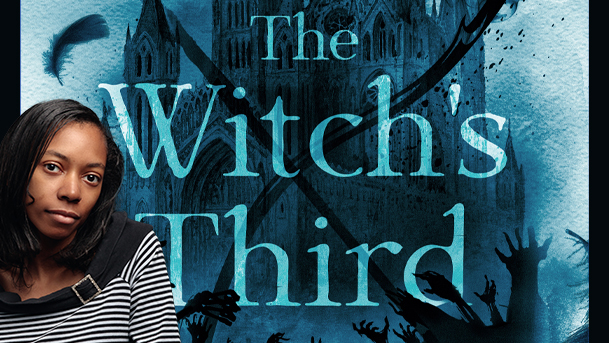
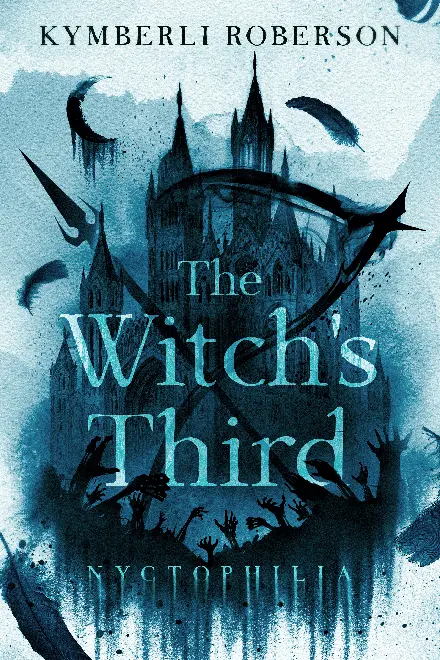
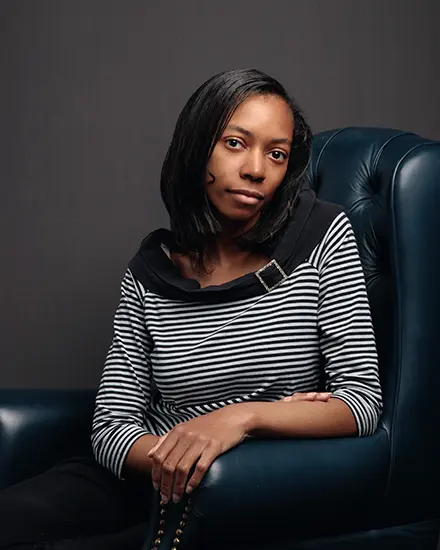
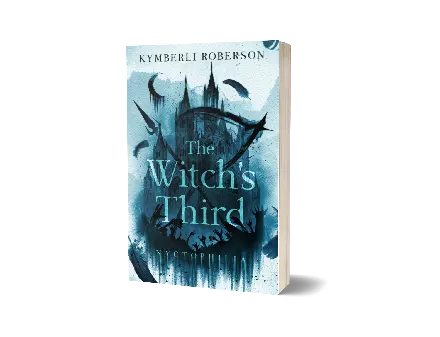
That’s the case that we run into with today’s storyteller, Kymberli Roberson, who has made a name for herself as a creator of flash fiction, and now takes what she’s learned there and brings her talents to a story that’s a bit meatier and more substantial. She’s managed to put together a spectacular tale that is sure to delight fans of dark fantasies when it releases later this October. To learn more about Kymberli Roberson, and her upcoming book, The Witch’s Third, part of the Nyctophilia series, read on!
Tellest: Greetings, Kymberli! As I mentioned earlier, I know that you’ve been hard at work on your upcoming book, and that finding the time to get everything in order ahead of the release has got to be a challenge. I wanted to thank you for sharing some of that time with me and your readers so that we can learn more about you and your projects!
Kymberli Roberson: Hi! Thank you for this interview, it’s great to be here! Getting things ready for the release of The Witch’s Third has definitely been a challenge, and just when I think I’ve learned all the rules, the next level begins hahaha. The months leading up to publication are best summed up as a whirlwind.
T: Everyone thinks that writing is the hardest part, but it’s usually one of the parts that writers spend the most time refining. Writing substantial stories don’t always go off without a hitch, but we at least begin to feel comfortable with it as we work on the tales. Marketing is a whole new beast, and it’s one that we don’t get to acclimate too with any considerable amount of time. What do you think makes marketing such a beast to overcome?
KR: There are so many unknowns in marketing, especially when it comes to discoverability, you know? Sometimes what works for one author doesn’t necessarily yield results for another. Being found by your audience is a huge beast to overcome, even if you have a following. I say this because we live in an era in which there are countless books being produced on the traditional and indie side, so there’s no guarantee your work will be found in spite of all the marketing research and steps implemented. One can do everything right and not see immediate results.
I think this is the part where I have to tell authors to not get discouraged about market saturations, and to remember that comparison is the thief of all joy. Just because your book hasn’t taken off like another author’s doesn’t mean that it won’t. It’s very important to explore different avenues for the sake of discoverability, because one never knows 100% where their target audience is hanging out.
T: One other thing that is difficult to reckon with when it comes to creating literature is that you don’t just have to find the right people—you have to find them at the right time. It’s a lot like catching lightning in a jar. The one thing that seems to be constant is that most writers have to either have the install base already, or they have to enjoy the art of writing enough to find their audience by hitting the pavement and really looking for them.
That might sound discouraging, but every writer also must have some hope in reserve. What is your hope, and what drives you to get your books out into the world in front of the people you know will enjoy them?
KR: Books and the ability to read can literally change the world. Having said that, I hope that my works can not only entertain readers, but also inspire them. This inspiration could be the pursuit of literature, writing or anything else that strikes them as a result of engaging with my books.
T: Near the start of these interviews, I like to ask a question that helps to set the stage and help those reading it understand where this love for creativity comes from. You clearly have a love for speculative fiction, but do you know where it all started? Did you have a favorite author growing up, or a storyteller who explored things in a different medium? Or was it maybe a person in your family or community that helped foster that creative spark?
KR: I’ve always had an overactive imagination that my mother encouraged me to use from a young age. My love for fantasy was present before I started kindergarten. I think I was the only girl in my class who was actively collecting all things dragons, dinosaurs, fantasy and science fiction VHS tapes (yes, I grew up in those times), figurines and other fantasy paraphernalia. This is probably weird to say but I didn’t have a favorite author growing up, even when I became a teenager; I was exposed to a wide variety of subjects from a young age ranging from mythology to history, archaeology and science, art and culture, etc., so my interests were extremely varied throughout grade school, junior high, and high school.
T: There’s nothing wrong with that! I also didn’t find a favorite author until I was well into my teens, and by then, pop culture had left its mark on me, and I think a lot of that translated into my work. When it comes to some of those subjects and things you enjoyed, can you pinpoint anything that had a grip on you more than others? Was there any franchise or movie that dug its nails in and kept you rooted in its world?
KR: If we’re talking movies, I would have to say The Prince of Egypt hands down. It’s such a profound film, not just because of the animation, the music score and the voice acting, but because of its emotional and mature depth, and more importantly, the way it elevated God by showing that all things are possible through Him: people enslaved by others can be freed, people can achieve dreams that were thought to be impossible, and they can find hope in even the darkest of moments.
T: Before we get into The Witch’s Third, I’d love to take a few steps that show us the journey you went on to arrive at this impending book release. One of the things that you’ve done a lot of—and well, at that—is write much, much shorter stories. Were the flash fictions that you’ve crafted the first stories you’ve played with, or are they something that you’ve come to more recently? What sort of skills would you say they’ve helped you bring into something with a weightier word count?
KR: I would say that the flash fiction pieces are the recent past. I wasn’t a stranger to writing novels at that time that some of these were published. In my failed attempts to publish some of my novels, I discovered that the stories and books I submitted to agents and magazines weren’t trending genres, nor did they conform to mainstream fiction. In hindsight, those rejections were probably for the best, because they allowed me as a writer to continue perfecting my craft so as not to become complacent, and so that I could gain more confidence in the work that I produced independent of others’ opinions. Flash fiction offered a chance to reduce filler and other clutter, while I distilled stories down to their essential elements. I think this way of crafting narratives is something that carried over to The Witch’s Third and other soon-to-be published books that I’ve written.
T: Learning to filter out things that are unnecessary is a skill that’s often hard for early writers to build on. With flash fiction and other shorter stories, especially with those that have a word count maximum, you really learn what’s essential to a story. With some of your longer form storytelling, though, have you ever had to kill one of your darlings that was difficult to part with?
KR: Oh absolutely hahaha! I get flashbacks just thinking about this. Killing your darlings is something every writer has to face at some point in the writing or revision stage. Sometimes my ideas are too complex for a novella, and I have to scale things back by reducing characters, dialogue and scenes. It breaks my heart sometimes, but…if elements don’t enhance a story, you have to evaluate the manuscript from a place of unbiased objectivity in so far as much as possible. When you as an author engage with your storytelling on that level, you realize what does and doesn’t work for that particular narrative, and you also understand that sometimes cuts have to be made no matter how much you love them.
T: Could we see a minor character from your world make their way to flash fiction or a short story?
KR: It’s possible that there could be some crossover between my shorter works, and my novellas in the future. And that’s all I’m saying, because my lips are sealed!
T: Okay, let’s jump a little bit forward now, and talk about The Witch’s Third. What brought this story to your mind, and when did you know that it was one that wanted to be told? Was there some “Aha” moment where it had a firm grip in your mind and then wouldn’t let go?
KR: Ooh, this is going to be a multifaceted answer. Get prepared because I will tell all (okay, it’ll really be a semi-condensed version, but just go with it). The idea for The Witch’s Third started with a challenge to myself to write a small-scale narrative, which included something considered common in reality. This was my way of stepping outside of my comfort zone a wee bit, as I had just completed a manuscript with a plot that carried universal stakes for the protagonist.
The “Aha” moment came to me in the preplanning stages of The Witch’s Third. I questioned the idea and concept of a witch, as well as how I wanted witches to fit into the fictional world of my book. At that point in the planning phase, the witch wasn’t going to be central to the story. However, that concept stuck with me until it became clear that I needed to attach more importance to the notion of a witch. As I began creating the cast of characters and the society that they inhabited, the nature of witches naturally made itself at home within the overall world-building.
I had doubts about the initial plot that I drafted up, which would have seen Tams’s role significantly reduced, along with the added introduction of major bad blood between Aubree and Sparn, who I planned to make a warlock and one of the story’s antagonists. In fact, the character dynamics for the original plotline were completely different from what you’ve read. It was only when I started writing The Witch’s Third that I realized that I as a writer wasn’t satisfied with the story I had planned. On paper the outline was perfect, the characters were good, as were some of the themes. But none of it felt right. Sometimes when that disconnect between a writer and their work occurs, one has to take a step back and trace the root of the problem to its source. I scrapped parts of the plot, revised character motivations, and did a deep dive into the wants and needs of the cast, as well as the expectations of the world around them. From there, things clicked into place. That was my second “Aha” moment.
T: When it came to that asynchronistic view that you had with the story, was that something that you as an author sort of tackled solo, or were you listening to the wants and needs of the characters, and were they sort of guiding you to the logical conclusion where we now find your completed tale?
KR: It was a mixture of both. Because I knew my characters, the world, and where the story was headed, I knew the areas that needed tackling, however, the characters also informed aspects of this view because they had a lived experience in the story’s world. In that regard, they educated me. This magic exchange caused pieces to naturally fall into place and led to pieces that I discovered were missing from the puzzle. The conclusion was also a fusion of the characters and my own guidance; it needed to be realistic to the tale being told, and one that would ultimately do justice to it.
T: Now that you’ve tried your hand at such wildly different storytelling, from flash fiction, to dark fantasy epics, do you feel a pull to one or the other more profoundly, or are they like not being able to pick a favorite child?
KR: They’re definitely a lot like children; you can’t pick just one, otherwise it’s favoritism hahaha. Flash fiction has a quaint charm that longer works can’t ever encapsulate, and vice versa. I think I would like to continue exploring both forms going forward, even if it’s just in private experimentation.
T: One of the things that is clear is that you’ve got a lot of passion for your work, and for fantasy as a genre. That’s clear from the hold it’s had on you since your childhood, to the time you’ve taken to ensure that your craft is just right as you bring The Witch’s Third to life. With that in mind, I wonder if you could offer a glimpse as to how you see how the fantasy genre has evolved, the current state of it, and where it’s going from here?
KR: Fantasy has always been one of the staples of mankind when you think about it. It helped give shape to the unknown, it helped to craft mythologies, which might later influence some cultures, and it even serves as entertainment and a lens through which man might view the world around itself. Over time the fantasy genre itself seems to have shifted from the mythology/folktales/universal way of life needlepoint to a form of avant garde specific to the societies that produced them (with some works transcending this to become universal across cultures and civilizations). I think in recent times, fantasy as a genre has started to unravel to a certain extent; it’s morphed into a type of a trend popularized by certain tropes and themes that don’t always make allowances for others. While this isn’t always a negative thing, I think societies and the individuals within them must determine what fantasy means, and they must also be careful not to warp the idea of “fantasy” and all that it embodies.
I could absolutely be wrong about this, but I think there will come a point in time in which creators of fantastic works and their consumers have to decide if they will be open to innovation, a return to the golden age of fantasy, or if they want to settle into something in-between. Will trends be followed or bucked in an attempt to stretch the human imagination and achieve some semblance of originality? At what cost is there in shifting that needlepoint, and how does that ultimately affect people? The process of creating a book isn’t solitary nor does it happen in a vacuum, after all. So… Where is fantasy going? It’s hard to say.
As a writer who holds to the idea of creating works that I myself would like to read, I’ve been blessed in that I’ve connected with readers searching for books that fall outside of mainstream trends, and writers who are striving to write those extraordinary works. Because of this, I have hope that the fantasy genre’s future is a bright one.
T: You clearly have a passion for the medium. I’d love to know your opinion on the prospect of writing to the audience. Do you think that’s something you absolutely have to do? Is there room to right for yourself or for the story, even if it doesn’t follow trends? Or would you suggest something different, perhaps along the lines of “one for them, one for me”?
KR: I’m a firm believer of authors writing the type of books they themselves would like to read. I think too often writers can get stuck in the heads of others; sometimes there’s the pressure to conform to the audience, the market, the trends, and whatever else is currently the dominant thing. Unfortunately, this can come at the expense of the writer’s happiness and the due justice of their skills and the works produced. There is room for authors to write specifically for themselves and the story, but it takes a large amount of courage to do this. I think authors have to be prepared to confront the metaphorical boogie man or the face in the mirror if they want to remain true to themselves and the work that they put out into the world. Part of this is knowing that trends are fleeting. They’re not meant to last forever even though that’s the illusion they often give. The sun will rise and fall on countless identical stories, but it’s those that stand apart that ultimately shine in the moonlight and glimmer at dawn because the twilight has yet to pass them by.
T: With the first book in your Nyctophilia series about to launch, have you been thinking about what the other stories in that series will bring to the table? Are we following characters like Aubree, Tams, and Sparn still, or do you have a new coven of witches to follow—or is it something completely different that you’ll explore?
KR: The Witch’s Third was meant to be a standalone work, so unfortunately, I can’t promise that there will be a continuation…though I did consider it. For now, I think it’s a story best left as is.
Hypothetically speaking, if I turned this into a series, I would explore the wider world with a cast of new characters and different themes. I would even give Sparn his own adventure working on a compendium of names! Cameos from The Witch’s Third: Nyctophilia would 100% be a thing, within reason. But again, this is all hypothetically speaking.
T: Let’s step away from hypotheticals for a moment—though now I’m excited for you about those what-if sessions you might be having in your head regarding what might happen in that world.
If book one of The Witch’s Third is closed for now, what is the next tome you see yourself picking up? What story is the next one dying to be told?
KR: I have another standalone dark fantasy tome up my sleeve, along with a dark fantasy dystopian horror duology (that’s a mouthful to say, I know) that’s set several hundred years into the future here in America. Both projects are in the editing phase, but I don’t want to name drop either just yet. We have to keep some things mysterious, you know?
T: Writing for yourself is impressive enough, but you’ve also worked as a contributor for other collections. How would you say that creative process compares to creating something from scratch for yourself?
KR: Oh, it varies vastly. When working as a contributor to a magazine or blog, there’s a level of give and take as far as trusting the other party goes. If I’m turning my work over to a magazine, I have to believe that the editor knows best, just as the editor has to believe that I as a writer will know my craft. One has to ensure that the quality of their work meets the standards of the company and the audience who will consume it. When it comes to publishing in the indie sphere, that level of trust carries over, so there’s some overlapping between writing for the self vs. the world. Start with the drafting phase and revise, revise, revise until your work is as good as it can get before you send it off. That’s not to say one should be a total perfectionist, but being attentive to even the smallest detail can go a long way. More than anything, I think one has to have passion for whatever project they’ve set themselves up for.
T: As we near the launch date for The Witch’s Third, I’ve no doubt that more hungry readers are going to be looking for where they can get additional news from you. Do you have a website or social media handle, or other place that aspiring witches and spellcasters can come to find you?
KR: As a matter of fact, I do! My website is in the works as we speak, but in the meantime, readers can find me on Facebook, Goodreads, and Pinterest. I welcome all, be they warted witches or wizened warlocks, so everyone can bring their staffs, robes and magic when they visit. Oh, but make sure to inform them to leave the death spells and spiked brews at the door.
T: That’s excellent, and I hope you get tons of visits! You can certainly include the links here so that they can find their way to you and join your coven!
KR: Thanks! Feel free to stop by because the door’s always open. Here you go:
https://www.facebook.com/KymberliRoberson
https://www.goodreads.com/author/show/70622864.Kymberli_Roberson
T: Kymberli, I wanted to thank you for sharing some of your time with us. As I mentioned at the start of this interview, I know that you’ve been busy getting everything in order for this release. At the time of the interview, we’re still a few months out, but I’m sure you know that it will fly by. Thank you for also letting us learn more about your book. I’m sure that many readers are going to be enthralled by your world and your characters!
KR: Thank you, it’s been such a pleasure! I appreciate you taking the time to interview me about The Witch’s Third: Nyctophilia and the nature of writing.
T: Once again, I’d like to thank Kymberli Roberson for the time she took to let us into the magical worlds she’s been creating. It’s always a lovely experience getting to pierce the veil and see what goes on in the realms beyond, and this author was a confident, passionate voice for the genre. If you want to see that love for fantasy conceptualized as a wonderful dark fantasy, be sure to sure to check out The Witch’s Third: Nyctophilia on Amazon, and add it to your wishlist ahead of its upcoming release.


Michael DeAngelo
Latest posts by Michael DeAngelo (see all)
- Historical Fantasy Promo – Under the Black Ensign: A Pirate Adventure of Mutiny, Freedom and High-Seas Action - October 1, 2026
- Sci-Fi Promo – DISCONNECTED: A Prison. A Paradise. Two Souls. - September 29, 2026
- Dark Fantasy Promo – Ascaron: Ad Vocatus, part. 1 - September 25, 2026